
The Mental Toll of the HER2 Scan Cycle

Life revolves around scans and blood work. There is no other way to put it.
I used to get scans every 6 weeks, then every 9 weeks, and only now – two and a half years after my diagnosis – have I finally made it to scans every 3 months. Even with that milestone, I still have monthly blood work and ctDNA monitoring. Depending on the results of my scans, ctDNA, and blood work, my entire mood can change.
The emotional cycle of waiting for scan results
Right after receiving results, if they are good, I feel relieved. If they are bad, I want to crawl into a dark hole and shut out the world. I have experienced both.
As the next scan approaches, anxiety slowly begins creeping back in. Is that new pain I've been feeling my cancer coming back? Why am I more tired this week? Is that just life, or is it progression? My mind starts connecting dots that probably aren't even there. Sometimes I think I create symptoms simply because I'm so consumed by the fear of finding something new.
How ctDNA adds another layer of anxiety
For me, ctDNA adds another layer to that emotional roller coaster. ctDNA is a new way of watching the disease from another angle. My oncologist submitted my surgical tissue to a company that is looking for my specific circulating tumor DNA in my blood. Every month there is another number to wait for, another result that could either reassure me or leave me wondering what it means. Unlike scans, which give a visual picture every few months, ctDNA can make it feel like you're checking in with your cancer constantly. A blessing and a curse.

A different kind of waiting: ctDNA vs. scan anxiety
Waiting for those blood results feels different than waiting for a scan. Scan anxiety builds over weeks and usually peaks on scan day. ctDNA is quieter but more frequent. It's like a monthly reminder that cancer is still part of my life, even when I'm feeling healthy. Sometimes I can convince myself that because I feel good, my ctDNA will be good too. Other times, I worry that it will detect something before a scan ever does. It's a different type of anxiety.
Some people argue, "I am stage 4. Why do I want to know about ctDNA creeping up before it shows on scans?" Well, for me, we have an action plan of what we are going to do. The sad thing is that by the time you see growth on scans, there are millions of active cancer cells, and I want to whack them back down before that moment.
Even when my blood work and ctDNA are excellent, my mind still asks, "What if this is the month something changes?"
Worrying about what happens if treatment stops working
One of the hardest thoughts to quiet is wondering what happens if my current treatment stops working. What treatment would I go on next? Would there be another option available? Would it work as well? How long would it work for? Living with an actionable mutation like HER2 means there is incredible hope because targeted therapies exist, but it also means becoming very aware that treatments may eventually stop working. I try not to live in that future, but as scan time approaches, it's hard not to think about the "what ifs."
Walking back into the hospital for scan day
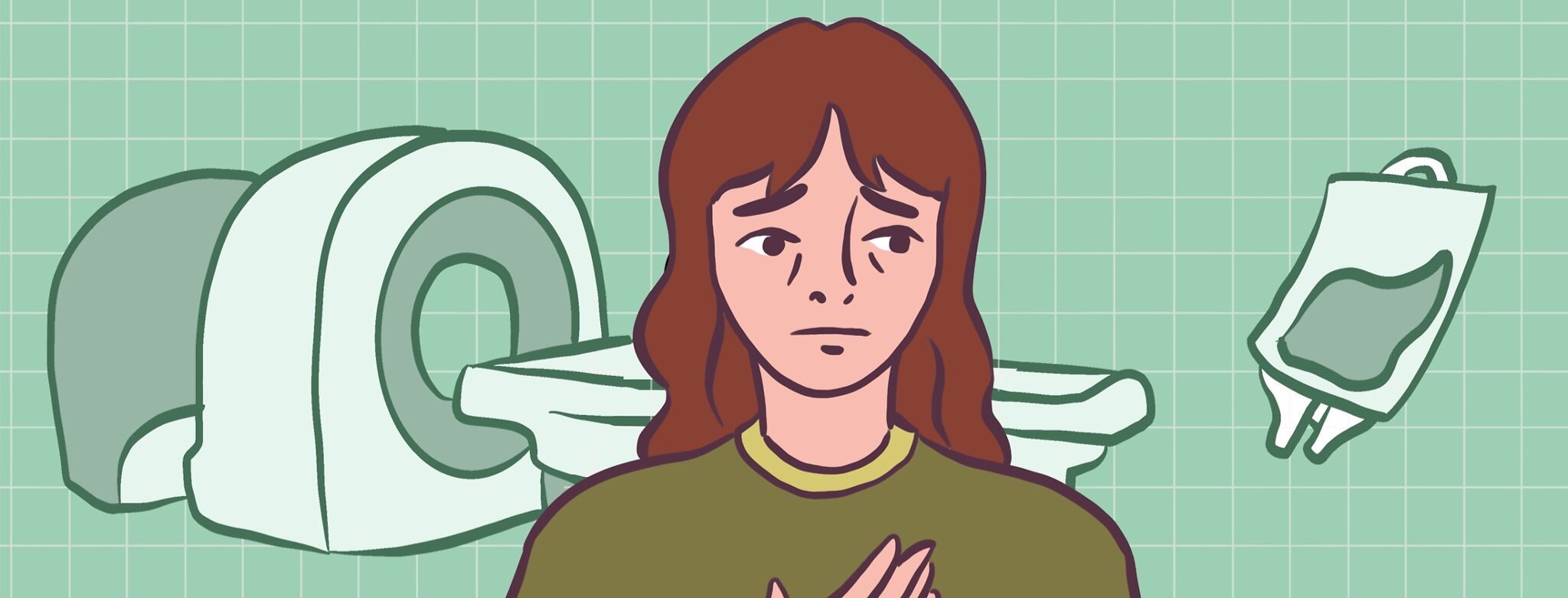
The worst part for me is being back at the hospital for the scan. Walking through the same hallways brings back every memory of diagnosis and treatment. I catch myself studying the faces of the technicians. Do they look worried? Are they avoiding eye contact? Did they see something? Deep down, I know they aren't giving away results with a facial expression, but anxiety has a way of convincing you otherwise.
Leaning on my husband to process results
I am fortunate because I usually receive my scan results very quickly through MyChart. Even so, my anxiety is so high that my husband has become my buffer. During scan weeks, he has access to my account and reads the report before I do. He knows how to explain it in a way that helps me process the information without immediately spiraling into panic. While I am waiting for results though, I try to keep as busy as possible to occupy my mind.
That can be difficult to explain to someone who believes good news should erase all anxiety. The reality is that every clear scan or reassuring ctDNA result brings relief, but it also starts the countdown to the next one. The cycle never completely stops.
Learning to hold happiness and fear together
Living with metastatic HER2 lung cancer has taught me that it is possible to feel happy and scared at the same time. I celebrate every good result because I know not everyone receives them. I also allow myself grace on the hard days when the uncertainty feels heavy. Both emotions can exist together, and I've learned that doesn't make me negative; it simply makes me human.
Join the conversation